Shenzhen H&S Innovation Technology Co., Ltd info@hscxled.com 86-134-2892-1577
In the field of LED screens, pixel pitch is a very important parameter, perhaps one of the first factors we need to consider when purchasing LED screens. This is not only related to the density of LED pixels on the screen, but also determines various other properties of the screen, especially the optimal viewing distance of the LED screen. P5 and P10 LED screens are two relatively common types in outdoor application scenarios at different pixel spacings. So what are the differences between the characteristics of P5 LED screen and P10 LED screen?
What is pixel spacing?
Pixel spacing, also known as dot spacing, refers to the distance between the centers of adjacent pixels on an LED display screen, measured in millimeters. It is an important technical parameter that directly affects the pixel density, resolution, and viewing distance of the display screen. The smaller the dot pitch of an LED screen, the smaller the spacing between pixels, the higher the pixel density, and the higher the screen resolution, thus achieving an overall improved visual effect.
What is P5 LED display?
P5 LED screen, specifically referring to P5 outdoor LED display screen, is a high brightness, high definition, and high stability display device designed specifically for outdoor environments.
Pixel spacing:
P5 in the P5 LED screen represents the pixel spacing, which is the distance between the centers of adjacent LED points. For the P5 screen, this distance is 5 millimeters.
Resolution:
P5 LED screens have high resolution, typically around 40000 dots per square meter. This high pixel density ensures that images and text can be displayed clearly and vividly even from a distance.
Brightness:
Outdoor LED screens need to be bright enough to be visible in daylight. The brightness of P5 LED screens is usually 5000 nits or higher, and some models can even reach up to 10000 nits. This high brightness ensures that the displayed content can be clearly seen even in bright sunlight.
Perspective:
P5 LED screens have a wide viewing angle, typically with a horizontal and vertical viewing angle of 160 degrees. This allows viewers to see the screen clearly from various angles.
power waste:
Outdoor P5 LED display screen design is energy-saving. The average power consumption is usually between 300 and 700 watts per square meter, depending on the specific model and usage conditions.
Durability:
P5 LED screen can resist various elements. They have a long lifespan, typically exceeding 100000 hours, and are able to resist wind, rain, and temperature changes. This makes them suitable for use in various outdoor environments.
Application:
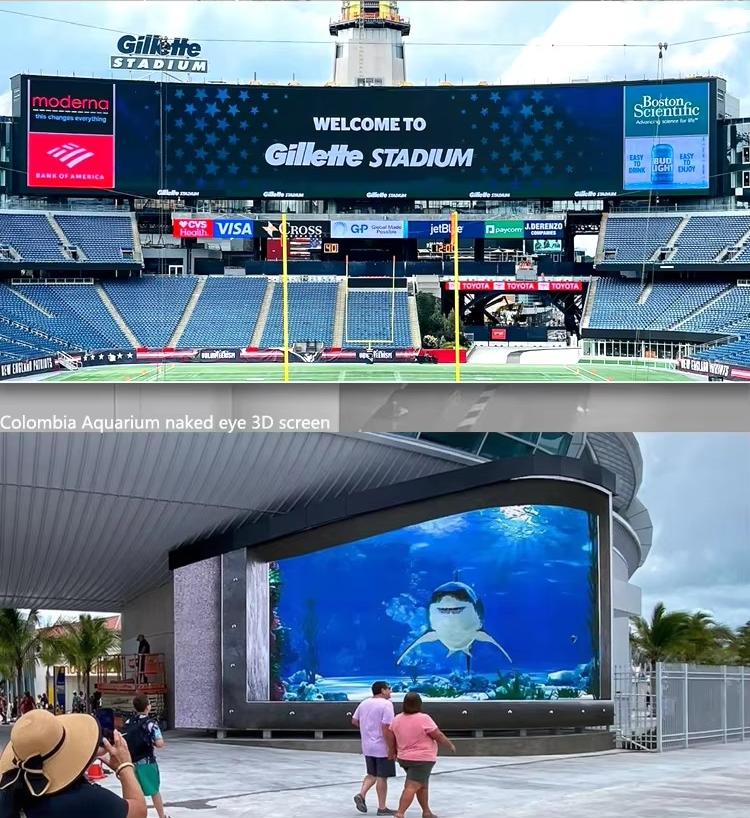
P5 LED screens are widely used in LED advertising screens, traffic guidance LED displays, sports event LED displays, cultural event LED screens, and so on. They can be seen in commercial streets, squares, parks, roads, bridges, tunnels, sports venues, and cultural and entertainment venues.
Installation:
P5 LED screens can be easily installed, configured, and disassembled according to different venues and requirements, providing flexibility in installation and use.
In summary, P5 LED screen is a multifunctional and sturdy outdoor display device that can provide high-quality visual effects and a wide range of applications.
What is the difference between P5 and P10 LED screens?
Pixel spacing:
The pixel spacing of P5 LED screen is 5 millimeters, which means the distance between adjacent pixels is 5 millimeters.
The pixel pitch of the P10 LED screen is larger, at 10 millimeters.
Resolution:
Due to the small pixel spacing, P5 LED screens typically have a high resolution, with 40000 LED pixels per square meter.
The pixel pitch of P10 LED screen is relatively large, but the resolution is lower compared to P5.
Clarity and image details:
P5 LED screens, due to their higher resolution and smaller pixel spacing, can display finer details and clearer images.
The P10 LED screen is suitable for large-scale, long-distance viewing; Although it can also be done up close, it cannot provide the same clarity and detail as P5 LED screens.
Brightness and viewing angle:
P5 and P10 LED screens are typically designed for outdoor use, resulting in higher brightness, typically reaching 5000 nits or higher.
In addition, the viewing angle of these two specifications of LED screens is also wider, while the P5 LED screen performs slightly better in terms of viewing angle range due to its smaller pixel pitch.
Cost:
P5 LED screens are usually more expensive than P10 screens because they have smaller pixel pitch and higher resolution per square meter. P10 is more suitable for larger installation or viewing distances in scenes, and is more cost-effective.
Application:
P5 LED screens are commonly used in scenarios that require high resolution and clarity, such as sports venues, concerts, and high-end advertising.
The P10 LED screen is suitable for applications with longer viewing distances, including billboards, transportation hubs, and other outdoor advertising spaces.